

A History of Vietnamese Agriculture
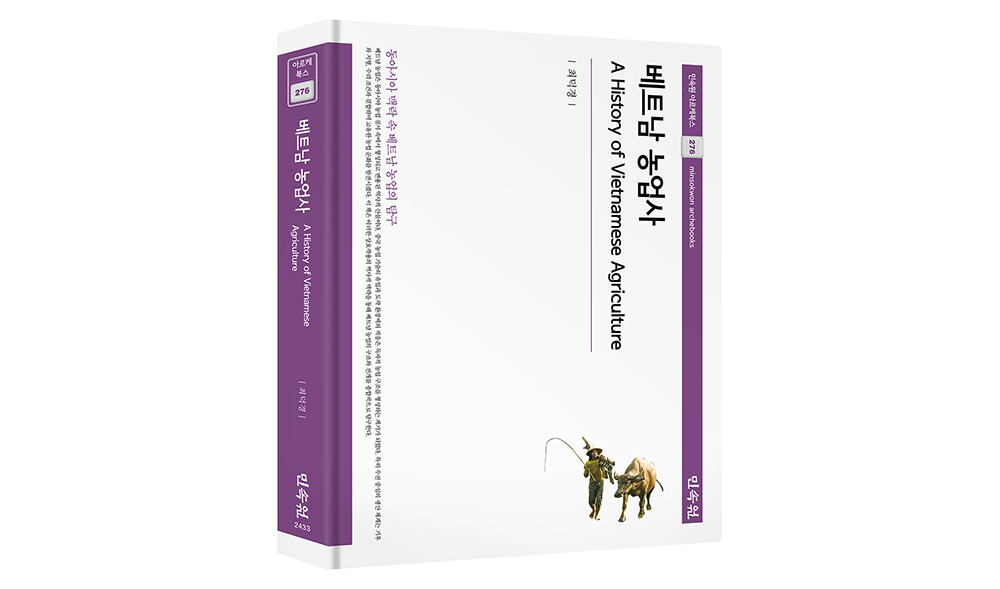
A History of Vietnamese Agriculture
Choi Deok-kyung, Emeritus Professor of History at Pusan National University, has recently published A History of Vietnamese Agriculture (Minsokwon, April 16, 2026), a comprehensive study of premodern Vietnamese agriculture grounded in decades of research on Chinese agrarian history.
The book offers a rare, systematic synthesis that goes beyond crop-specific studies to analyze agriculture within broader social and everyday contexts. Drawing on Chinese agrarian scholarship, Korean historical experience, and sustained engagement with Vietnam, it emphasizes the necessity of a comparative East Asian perspective.
It argues that Vietnamese agriculture, while influenced by China, developed into a distinct system adapted to local environmental conditions. Focusing on wet-rice and dry-field farming, the study examines crop selection, cultivation methods, and the environmental constraints on upland crops. It highlights how agriculture in flood-prone lowlands prioritized stability and risk management over maximum yield.
The work also explores climate knowledge, arboriculture, fiber production, fertilization, and village land systems, reconstructing the agrarian life-world in a holistic way. By situating Vietnam within East Asian agricultural history, it further shows how Vietnamese practices—such as early-ripening rice, fiber crops, and wetland farming—contributed to regional agricultural interactions.
Choi notes that the book not only fills a major gap in Vietnamese studies but also provides a new perspective for understanding East Asian agriculture as a whole.
- Author: Choi, Dukkyung (Department of History, Pusan National University)
- Contact e-mail: dkhistory@daum.net
 2026최덕경교수1.jpg
(110KB)
2026최덕경교수1.jpg
(110KB)